Accessible Education – working towards ending poverty

22 April, 2013 - Steph Gaut

Education really is a cornerstone of societies around the world. The knowledge and skills learned at school as well as the social connections made often contribute to job opportunities, providing a way for people to break free from poverty. But without inclusive education, people with disabilities are often denied this opportunity and are more likely to remain inside the ongoing cycle of poverty and disability.

This week is Global Action Week, a worldwide annual initiative from Global Campaign for Education. Under the slogan “Every child needs a teacher” the 2013 Global Action Week aims to raise awareness of the global teacher shortage, particularly in developing nations and how despite rising enrolments a lack of teachers means schools are just buildings.

Kingsley knows what a difference an education can make. Blind since birth, Kingsley often missed out on many opportunities, including going to school. But now he stands tall and dreams of change, thanks to the power of education.

The CBM-partner school in Cameroon is purpose built for children with vision impairment and has made an enormous impact on Kingsley’s life. Starting school at 12, Kingsley has now completed his schooling.  He is fluent in French and English; the confidence he received from his education has given Kingsley hope and purpose, and he was unanimously elected to be his village’s adviser and spokesman at community meetings – as everyone realised he had so much to contribute. Kingsley also sits on the local council, showing how development work and community outreach is shifting perceptions and breaking the barriers for people with a disability. Thanks to the education opportunities offered through CBM, Kingsley is looking forward to a brighter future.

“I’m going to university next year and I’m going to become a teacher .Going to school with sighted students doesn’t frighten me. I know that I can do it also!”

CBM works in the poorest places to modify existing schools to make them more accessible, promotes inclusive education, and provides local teachers with the training they need to support students with disabilities. We are also working with communities to break down discrimination and stigma associated with disabilities throughout families, communities and at a policy level to ensure education is accessible to all.

So as we remember this week the need for teachers around the world, let’s remember that teachers also need training on how to make education accessible for all.

No Comments

World Water Day 2013

21 March, 2013 - Chelsea Huggett

For people with disability, the challenge of accessing clean water can be even greater.

Three months ago I stood on a rooftop in a rural village in India. The pictures I had seen in the lead up to my travels bore no resemblance to the landscape before me. What had once been fertile farmland, was now barren and dry. Not a patch of green, not a cloud in the sky. What I was looking at was the third year of a drought.

When I think of water scarcity, I usually think of drought. As Australians we know all too well the effects that drought brings: the loss of livestock, crops and livelihoods.

What I often forget about is that water scarcity is also due to inequality. Across the globe, those who lack access to safe drinking water are those living in extreme poverty, and are those most marginalised.

In the world’s poorest countries, often water sources are located far away and it has to be carried long distances. For people with disability, the challenge of accessing clean water can be even greater. They may have to depend on others for water collection. Water might be contaminated and unsafe for drinking which leads to poor health. Or a lack of water means fewer hygiene practices which leads to disease and disability.
Lack of access to clean drinking water is one example of how
poverty is a cause of disability.

This year World Water Day celebrates the theme Water Cooperation. Water is a vital resource to us all and it is a resource we all must share. Water cooperation recognises that the current global water crisis is linked to inequality, poverty and unequal power relationships. Water cooperation calls for equal access to freshwater, including those most marginalised. This means people with disability. Water cooperation is really about alleviating poverty.

As I recall the parched landscape in India, I realise now that I was not simply seeing the effects of a drought. It was a glimpse of the struggle that over 780 million people face each day in accessing freshwater, not necessarily due to drought, but often due to poverty, inequality and marginalisation.


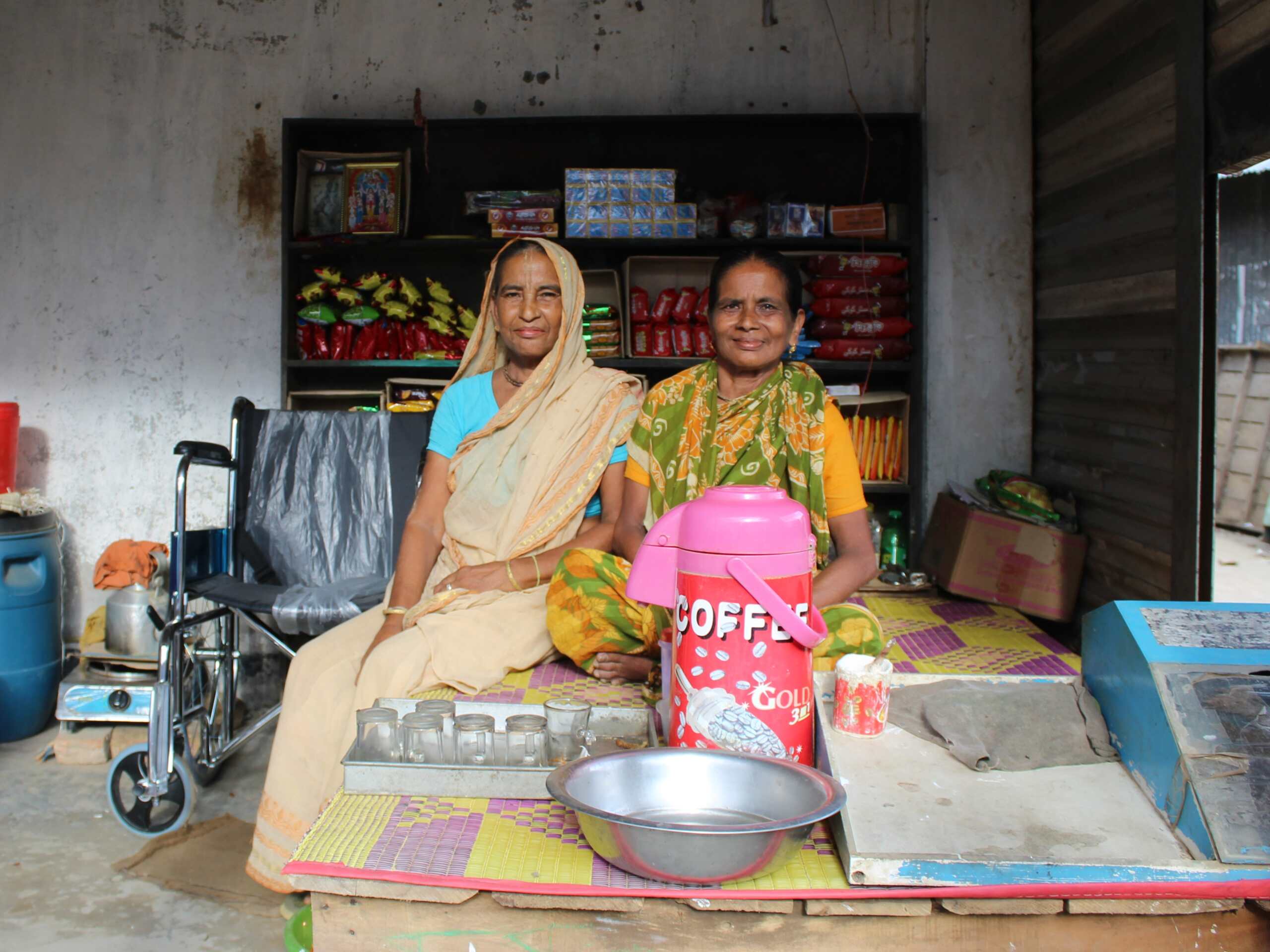
Check out Kazol’s Story


See what a difference accessible water and sanitation made for her, thanks to a CBM project.

Learn more about the CBM project in Bangladesh that brought that change for Kazol.

Buy someone a gift of Clean Water from our Gifts of Life catalogue. You’ll get a great card to give to someone, knowing your gift has helped a community learn about the importance of safe water.


Chelsea Huggett

Chelsea is completing a 12-month internship with CBM Australia. She has just returned from three weeks in Maharashtra, India where she studied primary health care at the Jamkhed Institute. Chelsea is looking forward to working with CBM throughout 2013 to raise awareness on the rights of people with disability.


1 Comment

It’s International Women’s Day

8 March, 2013 - Anna Gaskill

International Women's Day

Who do you stop to think about each year on International Women’s Day? Many people take this day, March 8th, to reflect on great women they’ve known – perhaps a mum, auntie or colleague who has been significant on the journey of life. For others, it is day to focus on the inequalities that many women still face, because of their gender.

For me, it’s also a day to think about some of the many women with disabilities that I’ve had the privilege to meet all round the world – in countries from Cameroon to Congo, from Bangladesh to Brazil.

Ten touch title=

And this year, because the theme for the 2013 International Women’s Day is about ending violence against women, I’m thinking of Ten Touch, from Cambodia. I think of a smiling, friendly woman who welcomed me to her town and shared her story, knowing I would share it with others in Australia and around the world. I remember how shocked I felt when she told me about the abuse she experienced after she lost her hand in a landmine accident.

Working at CBM, I had the ‘head knowledge’ of statistics that women with disability are two to three times more likely to face physical, sexual or emotional abuse than other women in their community. And I knew this was because they are often seen as worthless, or simply won’t be believed or supported if they tried to tell anyone what happened or seek justice through the legal system.

But what Touch told me that day was so much more real than any statistics. She told me of her own experiences of abuse at the hands of family and community members, and also of the many, many women she knows who have been raped because of their disability. These were real women, with real names and faces. And these patterns of violence and abuse related directly to the fact that they lived with disability.

Just last month a new report came out, from AusAID, looking into gender-based violence in Cambodia. You can read all the details in Triple Jeopardy, but the overwhelming finding was that women with disabilities do experience much higher rates of violence as a result of their disability. When I read about these findings, I looked beyond the numbers and statistics: I thought of Touch, and all the other individuals who make up those numbers. I also thought of how hard Touch and the Disabled People’s Organisation that she belongs to are working to support these women to have the perpetrators charged.

That’s why on this day, when the world stops to think about ending violence against women we must do something to make sure women with disabilities are not forgotten.


…………………………………..

Here’s some ideas for action:

………………………………….

PRAY WITH US, talk about and sign up.

Pray with us for women with disabilities everywhere – that attitudes will change in communities, and that they will be safe and valued in their communities.

Talk about the violence experienced by many women with disability – often, people aren’t aware of the issues, so sharing a link to Ten Touch’s story or the new study from Cambodia, you can be a part of getting people talking, getting things moving towards change.

Sign Up to End the Cycle to hear more of our stories of people with disabilities.


Ten Touch told her story to CBM as part of the End the Cycle campaign, an awareness-raising initiative that tells the stories of people with disabilities from poor countries in their own words. Touch understood how her story would be used, and had the final say in how she was represented in words and images. We’re proud to be able to share her story today, and would love to hear your thoughts after reading her story.


No Comments

Surrender Conference 2013

6 February, 2013 - CBM Australia

Surrender: 13

What if God’s Kingdom broke out in your neighbourhood? What would that look like? What impact would it have on you, and how would it change the lives of those around you?

These are the big questions being put forward at this year’s Surrender conference in Melbourne. At CBM we’re thrilled to announce that this year we’re partnering with Surrender to promote social justice and inclusion of those living in the margins of society.

Surrender conference is unique in Australia as the largest gathering of its kind, focusing on social justice, radical discipleship and incarnational mission. The conference is hosted by a number of missional communities and organisations working amongst the poor, and run in relationship with Indigenous Australians.


Surrender is a fantastic opportunity for us to connect with Christians from around Australia, and talk about how we can all help raise the voices of the world’s most marginalised people.

In these conversations, people with disabilities are often forgotten even though they’re some of of the most marginalised people! So we’ll be sat Surrender, talking about our Luke14 initiative to help churches be more inclusive, as well as our work helping people with disabilities overseas in the poorest places.

Register here for the Surrender 2013 Conference

The conference runs for three days with more than 1,200 people attending and consists of main sessions, Bible studies, workshops, music, conversations and great food.

Come along – our team will be there, spreading the message of disability inclusion and why it’s such an important part of God’s kingdom. AND we’d love to have you join us! If you’re planning on attending Surrender:13, let us know if you’d like to help out. We’ll be in our CBM marquee, hosting Luke’s Banquet; it’ll be a fantastic chance to enjoy good food and music, and even better company as CBM and l’Arche host lunch and conversation for each day of the conference.

We’d love for you to be involved in sharing the message of poverty and disability with a new generation of Christians! Look forward to seeing you there. You can register for the conference here or enquire by email.

No Comments

A Story from Ethiopia

18 January, 2013 - CBM Australia

One of our amazing program officers, Nicole, recently returned from a field trip to Ethiopia and she’s had some wonderful stories to share with us. One particularly moving story was about a young girl named Ajiba, and how CBM is working in her community to help transform her life.

*    *    *

Ajiba is 12 years old and lives with her mother in Agaro, Ethiopia.

This young girl’s life changed dramatically in the five years since she first suffered from unexplained headaches, ear pain and poor appetite around the age of seven.

Ajiba tried her best, but soon she couldn’t help her single mother around the home any more or attend school. Instead, the pain and confusion caused Ajiba to cry constantly. Ajiba’s mother didn’t understand what was happening to her daughter and took Ajiba to a traditional healer. The healer said Ajiba suffered from poor circulation and made several cuts into the little girl’s eyelids, leaving distinctive scarring.

Ajiba pictured with her mum, wearing her new glasses, after her treatment at a CBM partner hospital.

There was no improvement in Ajiba’s condition.

Soon after, a CBM field worker visited Ajiba’s village and quickly referred her to our partner hospital for medical diagnosis. It was here that Ajiba received eye drops and glasses to improve her vision. Now, Ajiba is a dedicated student who wants to be an eye doctor when she grows up!

In the poorest places, CBM is working to promote Community Based Rehabilitation (CBR) to help children just like Ajiba. CBR promotes the full participation and inclusion of people with disabilities in the life of their communities, and works towards meeting the needs of people with disabilities within their own communities.

For people like Ajiba, travelling to specialised clinics or institutions to receive medical treatment is often costly and difficult to access. Through CBR, our field workers travel and reach out to people with disabilities who would otherwise miss out on receiving medical or rehabilitative care.

Our field workers also help people with disabilities and their families through the CBR program to overcome physical and social barriers in their communities, change community attitudes towards disability, and promote a better understanding of disability in areas such as health, education, livelihood, inclusion, skill development and empowerment.

For people like Ajiba, the CBR program works with them and their communities to highlight the abilities and capacity of people with disability, and shows others that people with a disability have great value in their communities.


No Comments